Signal Corps
Signal Corps FT-243 Crystal Case Box BX-32A for the SCR-610 & SCR-509/SCR-510 in Excellent Condition

- MPN:
- BX-32A
- Condition:
- Used
- Shipping:
- $18.00 (Fixed Shipping Cost)


Frequently bought together:
Description
Signal Corps FT-243 Crystal Case Box BX-32A for the SCR-610 & SCR-509/SCR-510 in Excellent Condition
This box has about 120 spots to insert FT-243 crystals. The top cover has the felt to hold them in place.
The Signal Corps Box BX-32A (labeled as "Box BX-32-A" or similar) is a military storage/transport case specifically designed to hold FT-243 quartz crystals. These Bakelite-cased crystals were the standard type for crystal-controlled frequency selection in many U.S. Army WWII and early postwar FM vehicular radios.This box was primarily used with the SCR-610 radio set (and closely related variants like SCR-509/SCR-510 in some configurations). These were short-range, low-power FM voice transmitter-receiver systems operating in the VHF band (typically 20–27.9 MHz for armor/tank versions or 27–38.9 MHz for artillery/infantry support variants), with ranges around 5 miles. They were commonly mounted in jeeps, tanks, armored vehicles, and other mobile units for tactical communications during World War II and into the Korean War.
- Key component: The radio's core transmitter-receiver unit was the BC-620 (for SCR-509/510 series, 80 channels/crystals, 20–27.9 MHz) or BC-659 (for SCR-610 series, often 120 channels, 27–38.9 MHz). Both used FT-243 crystals extensively—up to 80 or more installed internally for preset channels, with spares stored in cases like the BX-32A.
- The BX-32A served as a field spare/organizational storage box for these crystals (often holding dozens, with compartments for protection during transport or maintenance). It appears in technical manuals and parts lists for the SCR-610 family (e.g., referenced alongside crystal boxes like BX-40 in later updates, or as part of maintenance chests like CH-72/CH-96).
- It supported quick channel changes or replacements in the field, as these sets relied on crystal stability for reliable FM nets (channelized to avoid interference).
Related Products
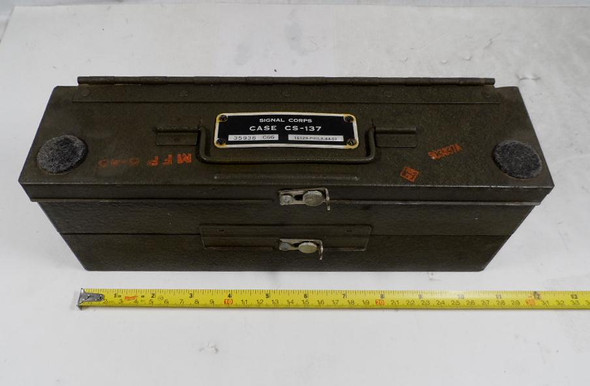

Signal Corps FT-243 Case CS-137 and Crystals for the SCR-509/510 and SCR-609/610 radio sets
Signal Corps
$149.99
Signal Corps FT-243 Case CS-137 and Crystals for the SCR-509/510 and SCR-609/610 radio sets
This box has two sections. One is full and the other os partially full.

Link Radio Corp. Type FMTR (Signal Corp SCR-298 FM Mobile Transmitter-Receiver Original Instruction Service Manual
Link Radio Corp
$14.99
Link Radio Corp. Type FMTR (Signal Corp SCR-298 FM Mobile Transmitter-Receiver Original Instruction Service Manual
I have checked and all pages are intact and readable.
All Pages and schematic...

CW Manufacturing Co. Crystal FT-243 Type for the Amateur Radio HF Bands 40 & 80 Meters NOS, Tested
FT-243
$21.99
CW Manufacturing Co. Crystal FT-243 Type for the Amateur Radio HF Bands 40 & 80 Meters NOS, Tested
**Free Shipping in the USA**
Please pick the frequency you need from the list and add...
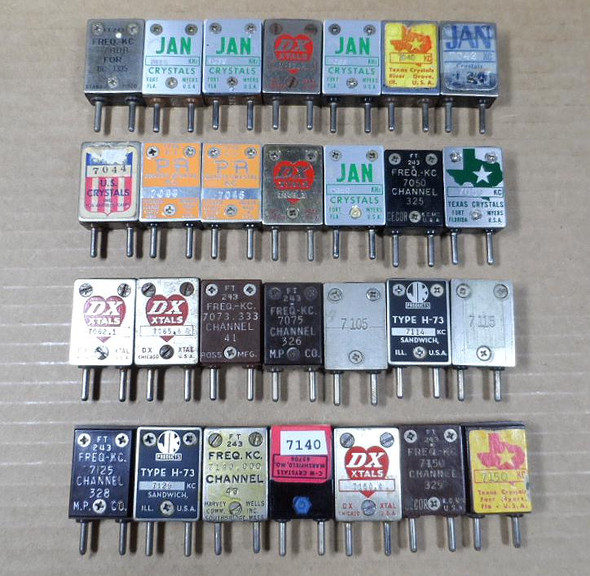
Crystals FT-243 Type from Various Manufacturers for the Amateur Radio Lower 40 Meter Band, Used & Tested
FT-243
$19.99
Crystals FT-243 Type from Various Manufacturers for the Amateur Radio Lower 40 Meter Band, Used & Tested
**Free Shipping in the USA**
Please pick the frequency you need from the list and add them...

Crystal Type Z-9, HC6/U (Replaces FT-243) for the Amateur Radio HF Bands 20, 40 & 80 Meters Used, Tested Group #1
FT-243
$14.99
Crystal Type Z-9, HC6/U (Replaces FT-243) for the Amateur Radio HF Bands 20, 40 & 80 Meters Used, Tested Group #1
**Free Shipping in the USA**
Please pick the frequency you need from the...