Eimac
Eimac 3-500Z Power Amplifier Tube, 1978 Date Code, in Original Box Tested Full Output S/N V82080

- MPN:
- 3-500Z
- Condition:
- Used
- Shipping:
- $18.00 (Fixed Shipping Cost)


Frequently bought together:
Description
Eimac 3-500Z Power Amplifier Tube, 1978 Date Code, in Original Box Tested Full Output
This Tube looks like new. I tested this 3-500Z in an Ameritron AL-80 Amplifier, and it is full emission as compared to a new one.
The Eimac 3-500Z is a classic high-μ power triode vacuum tube designed primarily for zero-bias Class AB2 (or Class B) linear amplifier service in RF applications, especially amateur radio HF amplifiers.
Key Specifications
frank.pocnet.net
- Type: High-mu power triode (amplification factor μ ≈ 130)
- Filament: 5.0 V ±0.25 V, 14.6 A (thoriated tungsten)
- Plate Dissipation: 500 W
- Max Plate Voltage: 4000 V
- Max Plate Current: ~400 mA (typical operating)
- Frequency: Usable up to 110 MHz for full ratings
- Physical: Approx. 6.38" long x 3.56" diameter
- Common Uses: Popular in amplifiers like the Ameritron AL-80(A/B), Heathkit SB-220, and similar legal-limit or near-legal-limit HF linear amplifiers. It excels in grounded-grid configurations.
n6jv.com
.
test results (50 W in → 500 W RMS out in an Ameritron AL-80) are solid and consistent with expected performance for this tube in excellent, full output condition. The AL-80 series (single 3-500Z) is typically rated for ~800–1000 W PEP SSB output with proper drive/tuning, and 500–700 W carrier/CW is realistic depending on drive level, line voltage, loading, and frequency. Strong output like yours indicates good emission and health.
Related Products


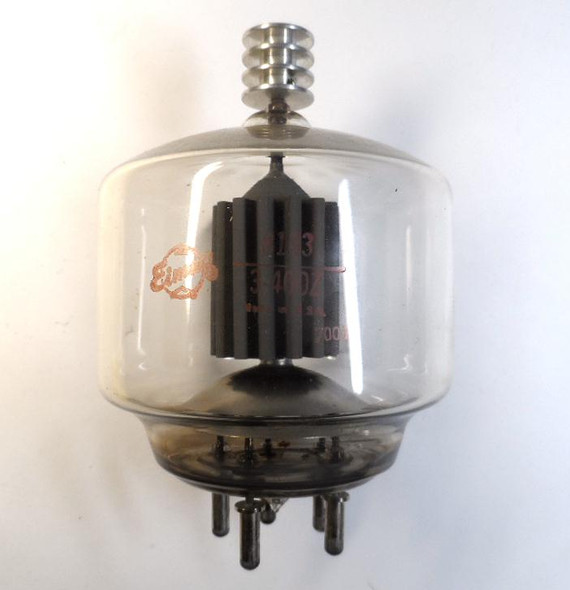
Eimac 3-400Z (8163) Power Amplifier Tube Tested Full Output S/N 921740 date code 7003
Eimac
$174.99
Eimac 3-400Z (8163) Power Amplifier Tube Tested Full Output S/N 921740 date code 7003
I tested this 3-400Z, in an Ameritron AL-80 Amplifier and it is performing at full output.
It also comes with...
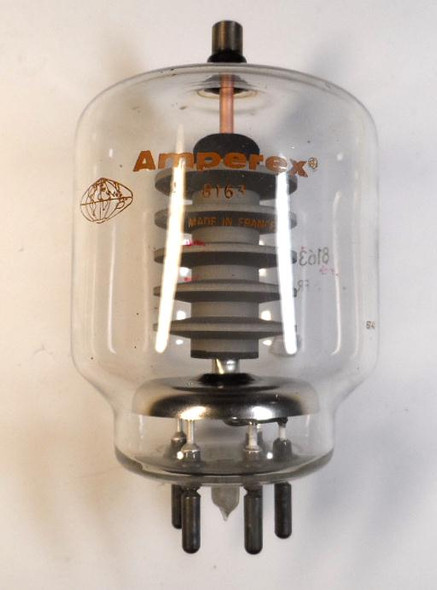
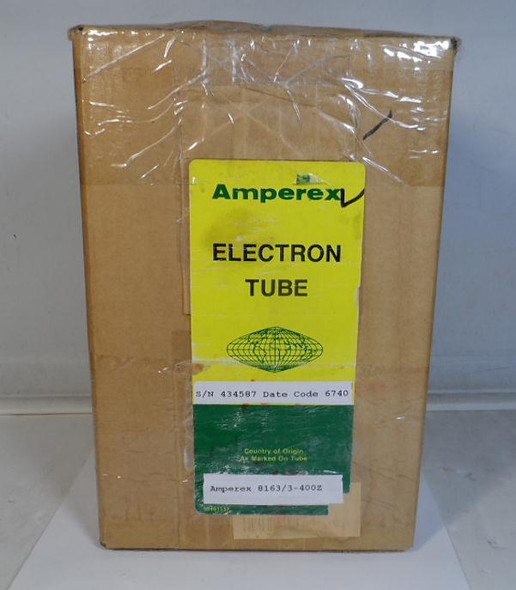
Amperex 3-400Z / 8163 Power Amplifier Tube Tested Full Output S/N 434587 date code 6740
Amperex
$174.99
Amperex 3-400Z / 8163 Power Amplifier Tube Tested Full Output S/N 434587 date code 6740
I tested this 3-400Z, in an Ameritron AL-80 Amplifier and it is performing at full output.
date code 6740

Eimac 4X150A Power Amplifier Tube Pulled, Full Output #1
$24.99
This Eimac 4X-150A Power Amplifier Tube was Pulled from service and was marked Full Output.�I will guarantee it to be to your satisfaction.
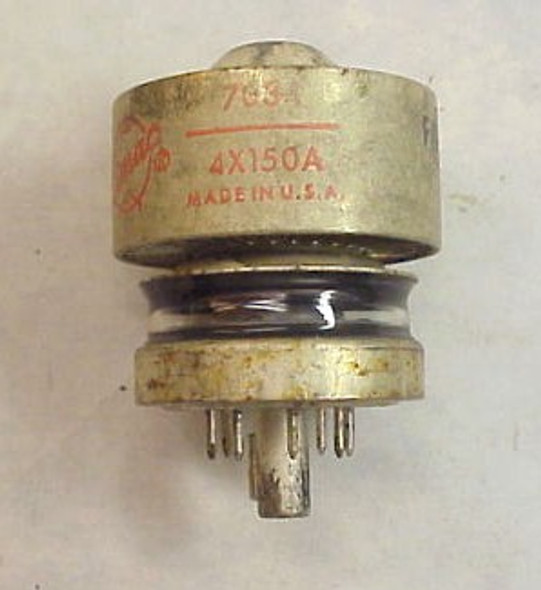
Eimac 4X-150A Power Amplifier Tube Pulled, Full Output #2
$24.99
This Eimac 4X-150A Power Amplifier Tube was Pulled from service and was marked Full Output.�I will guarantee it to be to your satisfaction.