Collins
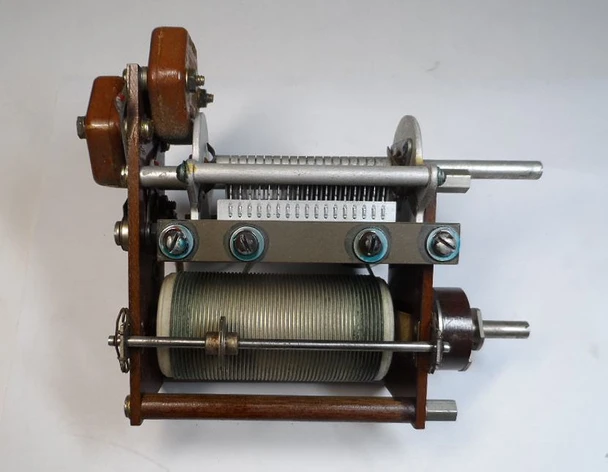
Compact LC Tuning Module, 30-374 pF Variable Cap & 1.0-43 uH Roller Inductor With Fixed Mica Capacitors
- Condition:
- Used
- Shipping:
- $12.00 (Fixed Shipping Cost)




Frequently bought together:
Description
Compact LC Tuning Module, 30-374 pF Variable Cap & 1.0-43 uH Roller Inductor With Fixed Mica Capacitors, and isolation Coupler with 1/4 inch shaft.
Description: Up for sale is a premium, ultra-compact military-surplus LC matching network network perfectly suited for Lower power and QRP ham radio antenna tuners, linear amplifiers, or custom HF homebrew setups. This heavy-duty sub-assembly tightly couples a precision 30 to 374 pF air variable capacitor alongside a high-efficiency 1.0 to 43 uH variable roller inductor wound over a grooved ceramic insulating core.Engineered for peak space-efficiency and low-loss performance, the chassis relies on high-isolation phenolic side plates and includes two vintage brown molded high-voltage mica capacitors acting as range padding blocks. Independent dual shafts allow for manual dial adjustments or easy retrofitting to automatic stepper/servo motor controls. The inductor turn tracks cleanly with smooth mechanics and great silver-plated ribbon. A highly rugged, clean piece of classic radio history ready for your workbench!This specific unit is a vintage military command radio automatic antenna tuner sub-assembly, built to rigorous defense standards for high-reliability HF (high frequency) communications.The physical structure—especially the distinctive dual brown Bakelite/phenolic capacitor modules bolted to the side, the compact stacked chassis, and the concentric silver-plated contact wheel on the roller inductor—identifies it as a specialized RF matching network. This sub-assembly was used in mid-century aircraft command sets and transportable shelter networks (such as those designed by companies like Collins Radio, Barker & Williamson, or E.F. Johnson) to dynamically resonate shorter wire or whip antennas across the 2–30 MHz spectrum.
- Air Variable Capacitor: Delivers a tight tuning sweep from 30 to 374 pF. The precision-aligned, interlocking aluminum plates maintain narrow air gaps to handle several hundred volts of RF peak voltage without arcing.
- Roller Inductor: Continuously adjustable from 1.0 to 43 µH. It utilizes high-conductivity silver-plated wire wound across a grooved ceramic cylinder. A spring-loaded tracking wheel glides along the rotating turns, allowing flawless, step-less adjustment.
- Fixed Auxiliaries: Two vintage high-voltage brown molded Mica Capacitors are integrated directly onto the frame. In the original equipment, these were switched into the circuit via relays to pad the capacitance when the 374 pF air variable hit its mechanical limit, drastically extending the system's impedance matching range.
- Mechanical Interface: Features high-insulation phenolic structural side plates that prevent RF leakage to the chassis. Dual independent shafts stick out to accept manual dials, reduction gears, or automatic servo-motor linkages.
Related Products

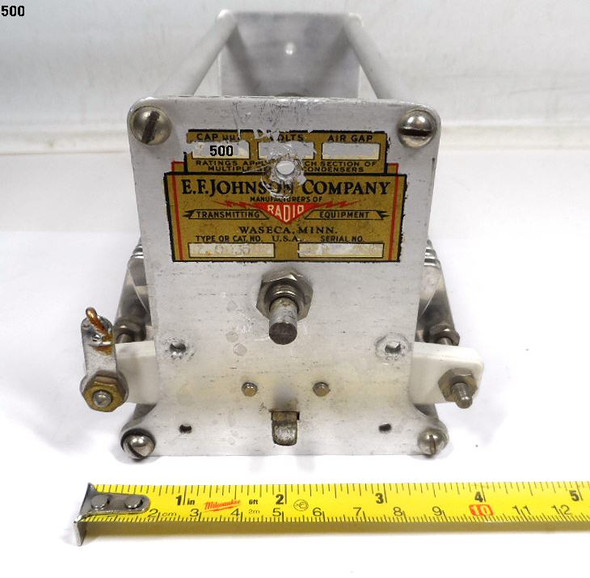
EF Johnson 36 pF - 500 pF Single Section Air Variable Capacitor
EF Johnson
$36.99
EF Johnson 36 pF - 500 pF Single Section Air Variable Capacitor
Specifications & Information
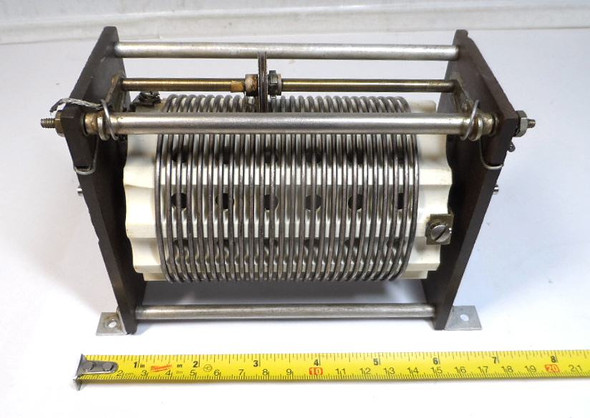
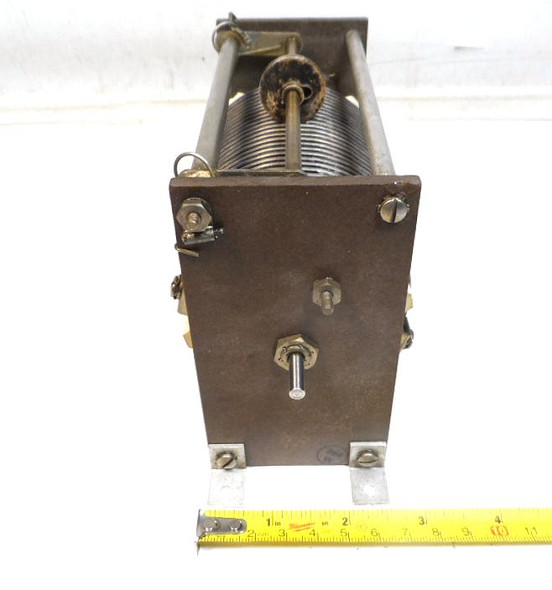
Roller Inductor 0.15 to 29 uH with Ceramic Coil Form in Excellent Condition
Gates
$74.99
Roller Inductor 0.15 to 29 uH with Ceramic Coil Form in Excellent Condition
This is a compact vintage roller inductor (variable RF coil), m
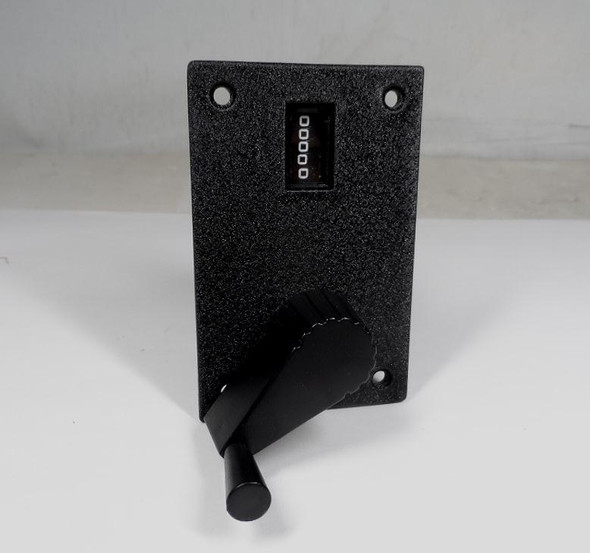

Turns Counter Premium Dial for Vacuum Capacitors and Roller Inductors Model #1
Nationwide Radio
$59.99
This Listing is for (1) turns counter dial.
This dial is used for turning and calibrating vacuum capacitors and roller inductors. It is great for Amateur or professional Antenna Tuners and...


EF Johnson 500 pF Single Section Air Variable Capacitor 36 - 500 pF
EF Johnson
$37.99
EF Johnson 500 pF Single Section Air Variable Capacitor 36 - 500 pF
Genuine E.F. Johnson Co. (Waseca, MN) single-section air-variable